

Frequently asked questions
and resources
FAQs about JELIDO®
Does JELIDO® help prevent urinary tract infections (UTIs)?
JELIDO® does not contain chlorhexidine and is not indicated for antisepsis.1 If antisepsis is desired during catheterization or urethral instrumentation, consider INSTILLAGEL® – a lubrication option for catheterization that contains both chlorhexidine (antiseptic) and lidocaine (anaesthetic).2
Visit instillagel.ca to learn more.
What is the maximum dose?
Adults1
- Dependent on the application site
- Oral: 20 mL (400 mg)
- Urethra and bladder: 40 mL (800 mg)
- Maximum single dosage for JELIDO® has not been established
- No more than 4 doses should be given during a 24-hour period
- Debilitated, elderly, or acutely ill patients should receive reduced doses, adjusted to account for the patient’s weight and physical condition
Children1
- Children need to be closely observed during and after use of topical anaesthetics as they are at greater risk than adults for serious adverse events (e.g., methemoglobinemia)
- 2–11 years of age
- Dose varies based on age and weight
- Dose should not exceed 6 mg/kg of body weight or 3 mL per 10 kg body weight
- 12–18 years of age
- Doses should be commensurate with weight and physical condition
- No more than 4 doses should be given during a 24-hour period
Can JELIDO® be administered to children?
Yes. However, special precautions and attention are necessary. See dosage information for children directly above.
Children should be closely observed during and after use of lidocaine as they are at greater risk than adults for serious adverse events (e.g., methemoglobinemia).1
Ensure the caregiver understands to limit the dose and area of application and to prevent accidental ingestion.
JELIDO® should not be applied to the genital mucosa of children or infants due to insufficient data on absorption.
Parents should be reminded of the importance of emotional and psychological support of younger children undergoing medical or surgical procedures.
Pediatrics (2–18 years of age): Children should be given reduced doses commensurate with their age, weight, and physical condition.
Pediatrics (< 2 years of age): Lidocaine should be used with caution in this patient population.
JELIDO® is contraindicated in infants ≤ 12 months of age who require treatment with methemoglobin-inducing agents (e.g., sulfonamides).
Can JELIDO® be administered to elderly patients?
Yes. However, special precautions and attention are necessary. Elderly patients may be more sensitive to the systemic effects due to increased blood levels of lidocaine following repeated doses and may therefore require dose reductions.1
Debilitated, elderly, or acutely ill patients should receive reduced doses, adjusted to account for the patient’s weight and physical condition.
Can JELIDO® be used during pregnancy and labour or while nursing?
There are no adequate and well-controlled studies in pregnant women on the effect of lidocaine on the developing fetus.1
It is reasonable to assume that a large number of pregnant women and women of child-bearing age have been given lidocaine. No specific disturbances to the reproductive process have so far been reported (e.g., no increased incidence of malformations). However, care should be taken during early pregnancy when maximum organogenesis takes place.
Lidocaine is not contraindicated in labour and delivery. Should JELIDO® be used concomitantly with other products containing lidocaine during labour and delivery, the total dose contributed by all formulations must be kept in mind.
Lidocaine and its metabolites are excreted in breast milk. At therapeutic doses, the quantities of lidocaine and its metabolites in breast milk are small and generally are not expected to be a risk for the infant.
How do I administer JELIDO®?
Refer to our step-by-step administration webpage.
What are the adverse reactions associated with JELIDO®?
Adverse experiences following the administration of lidocaine are similar in nature to those observed with other amide local anaesthetic agents. These adverse experiences are, in general, dose related and may result from high plasma levels caused by overdosage or rapid absorption, or may result from a hypersensitivity, idiosyncrasy, or diminished tolerance on the part of the patient.1
An increased incidence of postoperative sore throat has been reported following endotracheal tube lubrication with lidocaine jelly.
Serious adverse experiences are generally systemic in nature. The following adverse events are those most commonly reported:
Central Nervous System (CNS): CNS manifestations are excitatory and/or depressant and may be characterized by the following signs and symptoms of escalating severity: circumoral paresthesia, light-headedness, nervousness, apprehension, euphoria, confusion, dizziness, drowsiness, hyperacusis, tinnitus, blurred vision, vomiting, sensations of heat, cold or numbness, twitching, tremors, convulsions, unconsciousness, respiratory depression and arrest. The excitatory manifestations (e.g., twitching, tremors, convulsions) may be very brief or may not occur at all, in which case the first manifestation of toxicity may be drowsiness merging into unconsciousness and respiratory arrest.
Drowsiness following the administration of lidocaine is usually an early sign of a high lidocaine plasma level and may occur as a consequence of rapid absorption.
Cardiovascular System: Cardiovascular manifestations are usually depressant and are characterized by bradycardia, hypotension, arrhythmia, and cardiovascular collapse, which may lead to cardiac arrest.
Allergic: Allergic reactions are characterized by cutaneous lesions, urticaria, edema, or, in the most severe instances, anaphylactic shock. Allergic reactions of the amide type are rare (< 0.1%) and may occur as a result of sensitivity to either the local anaesthetic agent or other components in the formulation.
What are the ingredients in JELIDO®?
Medicinal ingredients include lidocaine hydrochloride monohydrate (20 mg/mL).1
Non-medicinal ingredients include hypromellose USP, purified water, and sodium hydroxide.
Does JELIDO® contain latex?
No. JELIDO® does not contain latex. Stoppers are made of bromobutyl rubber.1
Does JELIDO® contain preservatives?
No. JELIDO® is a preservative-free formula.1
How is JELIDO® supplied/packaged?
JELIDO® is available as a sterile, prefilled syringe made of a polypropylene (PP) cylinder, with an inside piston plunger stopper and an outside syringe tip-cap. Both stoppers are made of bromobutyl rubber. The filled syringe contains 6 mL or 11 mL of JELIDO®. The syringes are packed in thermoforming foil blister (sterile) packs and are supplied in boxes of 10 x 6 mL or 10 x 11 mL, consisting of a PP film and an uncoated sterile medical paper sheet (peeling back). The outer packaging is a carton made of cardboard, which contains a paper package insert.1
The cylinders have 1 mL graduation for individual dosing. The graduation is printed on the syringe cylinder.
JELIDO® syringes are for single use only. Any unused product should be discarded.
How should JELIDO® be stored?
Store JELIDO® between 15 °C and 30 °C. Protect from freezing.1
Who can I contact should I have any questions about JELIDO®?
For questions about JELIDO®, please contact Medical Information at 1-888-550-6060 or medinfo@pendopharm.com.
Additional resources
Additional clinical resources to support proper urinary catheter insertion.
 Download
Clean intermittent urethral catheterization in adults: Canadian best practice recommendations for nurses
 Download
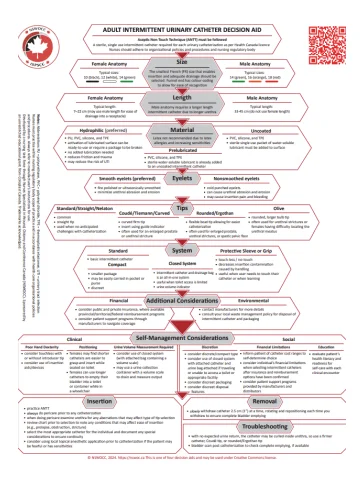
Adult intermittent urinary catheter decision aid
 Download
Catheter-associated urinary tract infections (CAUTI) prevention guideline
 Download
CADTH: Local anesthetic for urinary catheter insertion: A review of clinical effectiveness, cost-effectiveness, and guidelines
 Download
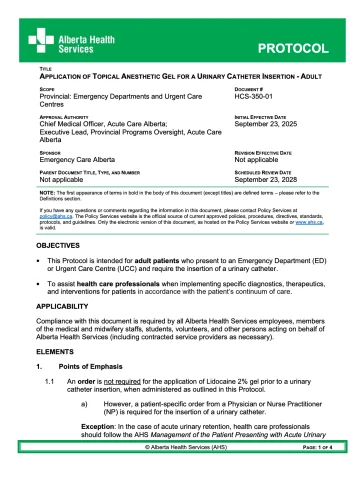
Alberta Health Services: Protocol
Application of topical anesthetic gel for a urinary catheter insertion - Adult
Discover the performance profile of the FARCO®* syringe.
Learn more
For an antiseptic lubricant gel option for catheterization